
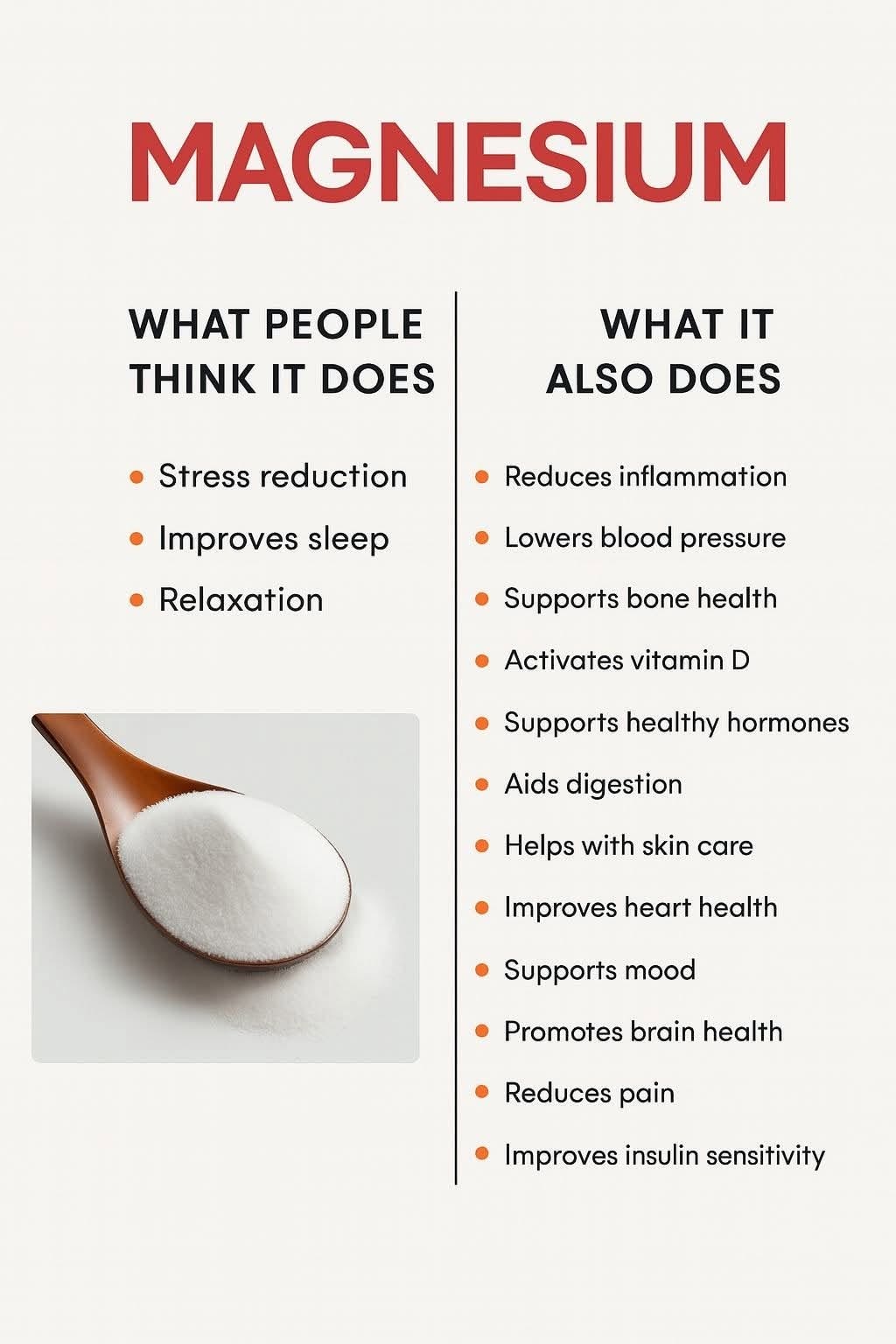
Learn everything you need to know about magnesium in your diet, including its benefits, top food sources, and much more!Everything To Know About Magnesium In Your Diet
Since the body can’t produce magnesium on its own, it must be obtained from food or supplements. The recommended daily intake for adults varies between 310–420 mg depending on age and gender, but many people fall short due to modern diets heavy in processed foods.
Pro Tip: Magnesium works best when balanced with other minerals like calcium, potassium, and D, so aim for a nutrient-rich diet rather than relying on one source.Benefits of Magnesium
1. Supports Heart HealthSupports Heart Health
Magnesium helps regulate blood pressure and maintains a steady heartbeat. that people who get enough magnesium have a lower risk of heart disease and stroke. By relaxing blood vessels and reducing inflammation, it keeps your cardiovascular system strong.
It also prevents calcium build-up in arteries, which can otherwise lead to hardening and blockages over time.
2. Improves Sleep QualityImproves Sleep Quality
If you struggle with insomnia or restless nights, magnesium may help. It plays a role in activating the parasympathetic nervous system, which is the part that enables you to relax. It will also support the production of melatonin, which is the sleep hormone.
Remember that a magnesium-rich evening snack or supplement can help you drift off more easily.
Pro Tip: Many people find that pairing magnesium with a bedtime routine like herbal tea or meditation enhances its calming effect.
3. Eases Muscle Cramps and SpasmsEases Muscle Cramps and Spasms
If you are an athlete or and active individual, you can turn to magnesium to prevent cramps. It helps muscles contract and relax properly by balancing calcium in muscle fibers. Low magnesium is a common culprit behind leg cramps and twitching.
also suggest that magnesium can speed recovery from exercise, reducing post-workout soreness and stiffness.4. Reduces Stress and AnxietyReduces Stress and Anxiety
Magnesium has a calming effect on the brain and nervous system by regulating like GABA, which promote relaxation. This is why adequate intake is linked to reduced stress and lower anxiety levels.
It’s sometimes called “nature’s chill pill” because of its ability to regulate the body’s stress response and lower cortisol levels naturally.
5. Strengthens BonesStrengthens Bones
Calcium gets most of the credit for bone health, but magnesium is just as important. About 60% of the body’s magnesium is stored in bones, where it contributes to bone density and strength. Without enough magnesium, the calcium absorption in your body will also decrease.
Long-term deficiency has even been linked to osteoporosis, making magnesium just as essential as calcium for lifelong bone health.
6. Supports Energy ProductionSupports Energy Production
Every cell in your body needs magnesium to create ATP—the main energy molecule. Low magnesium often leads to fatigue, weakness, or low endurance. Ensuring enough magnesium in your diet helps keep your energy levels stable throughout the day.
Magnesium-rich foods are particularly important for athletes, as they help prevent energy dips during physical activity.
