
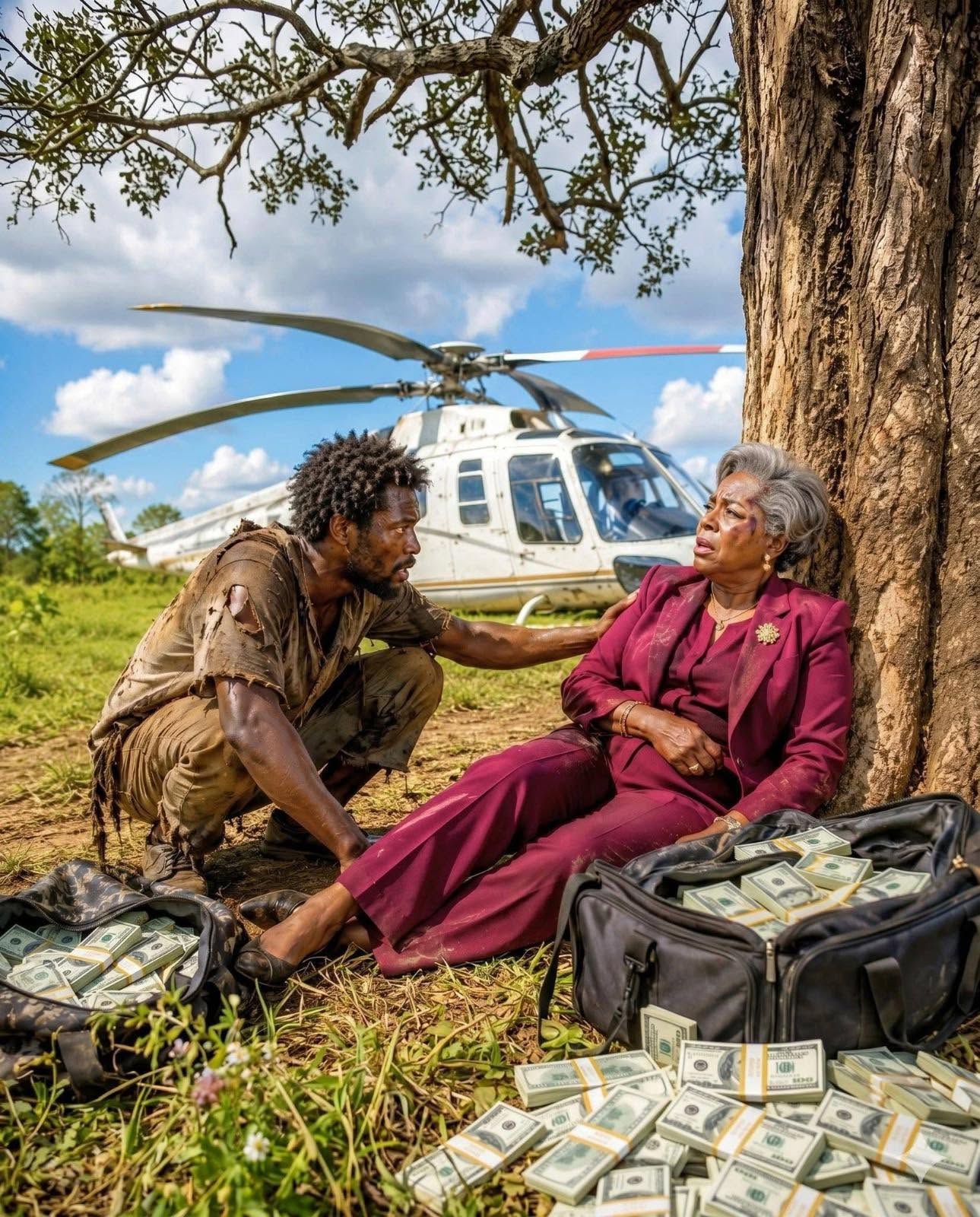
The third van came too early.
That was the truth.
He could blame the economy. He could blame clients. He could blame the large firm that came into the area and undercut his prices. He could blame the loan officer who smiled too confidently. He could blame fuel costs, police checkpoints, delayed payments, bad luck, and timing.
All of those things were real.
But the deepest truth was simpler.
He bought the third van before the client base was strong enough to carry it.
He took the loan when hope looked too much like math.
Then three major clients left in the same month.
To service the debt, he sold two vans.
Without the vans, he lost capacity.
Without capacity, he lost the remaining clients.
The last van was repossessed on a Tuesday morning while he stood in the compound and watched it go.
No shouting.
No drama.
Just two men with papers, a tow hook, and the kind of indifference that follows a lawful thing done without mercy.
That evening, he came home to find Amaka sitting at the kitchen table.
Her hands were flat against the surface.
He knew that posture.
It meant she had already decided something and was waiting for him to arrive so the decision could become spoken.
“I can’t do this anymore, Toby,” she said.
Their daughter, Chisom, was asleep in the next room.
Tobenna looked toward the door.
“Amaka…”
“I tried.”
Those two words hurt more than blame would have.
She took Chisom and went to Aba.
He paid the last month on the flat, packed what he could carry, and walked out.
That was fourteen months ago.
In fourteen months, he had not stolen anything.
Not when hunger made his mouth fill with bitterness.
Not when unattended phones sat on market counters.
Not when wallets peeked from open bags.
Not when he slept outside shops and watched people drop more money on snacks than he had seen in a week.
It was not because he was holy.
It was not because temptation never came.
It was because a man has to know where he ends before the world starts writing over him.
Tobenna had lost his business, his flat, his wife, his daily place in his daughter’s life, and the simple dignity of waking up under a roof that belonged to him.
But he had not lost his line.
Some people bend when life presses them.
Some break.
Some twist themselves into whatever shape survival demands.
Tobenna had been built straight.
The years had not managed to bend him.
He did not know, walking that empty road in Ogen State with forty naira and hunger in his bones, that the world was about to test that line in the most direct way it ever had.
The bags appeared without warning.
Four black bags scattered across the dirt road as if they had fallen from the sky.
At first, Tobenna thought they were luggage.
Then he saw the split seam on one of them.
Then he saw what was inside.
Bundled notes.
Dollars.
Not naira.
Dollars.
Stacks wrapped tightly, clean and heavy, the kind of money that does not look real until you have no money of your own.
He stopped walking.
The sun pressed against the back of his neck.
For several seconds, he did not move.
He looked up the road.
Empty.
He looked down the road.
Empty.
He looked at his plastic bag, thin, old, carrying everything he had left in the world.
Then he looked at the cash again.
A thought entered his mind with perfect clarity.
This is enough.
Enough for food.
Enough for a room.
Enough for clothes.
Enough to call Amaka and say, “Bring Chisom. I can stand again.”
Enough to restart.
Enough to buy two motorcycles, then a van, maybe the correct order this time.
Enough to stop being a man people looked through.
Enough to become visible again.
He crouched beside the split bag.
The money was real.
He touched one bundle with two fingers, then pulled his hand back as if it were hot.
His mind began calculating before his conscience could speak.
Four bags.
Empty road.
No witnesses.
No name.
No owner.
No police station nearby.
No guarantee anyone would believe him if he reported it.
No guarantee someone powerful would not accuse him anyway.
No guarantee that honesty would feed him tonight.
He thought about forty naira.
He thought about the last call with Chisom.
“When am I coming to see you, Daddy?”
He had laughed softly and said, “Soon.”
But soon had become one of those words poor people use when truth would hurt a child too much.
He thought about Amaka’s hands on the table.
He thought about his mother’s Bible in his plastic bag.
He thought about his old vans.
He thought about the van being towed away.
He thought about the order he had gotten wrong.
Then he heard a sound from the bush ten meters to his right.
Small.
Strained.
Human.
Everything that happened after that came down to that sound.
And what he did when he heard it.
Tobenna stood slowly.
He looked once more at the bags.
Then he left them where they were and walked toward the sound.
The grass was high enough to scratch his arms. Dry stalks broke under his feet. Flies lifted and settled again. For a moment, he saw nothing.
Then he saw her.
A woman half-hidden by the grass, lying on her side with one arm stretched forward.
She had been trying to crawl toward the road.
She had run out of strength.
Her face was pale beneath dust. There was a cut above her eyebrow. One shoe was gone. Her coat was torn. Her phone was nowhere near her. Her breathing came in careful, shallow pulls, like each one had to be negotiated.
Her side was dark with blood.
Not the kind of wound a man could ignore and remain human.
Tobenna crouched beside her.
Her eyes opened immediately.
Sharp.
Focused.
Terrified, yes.
