
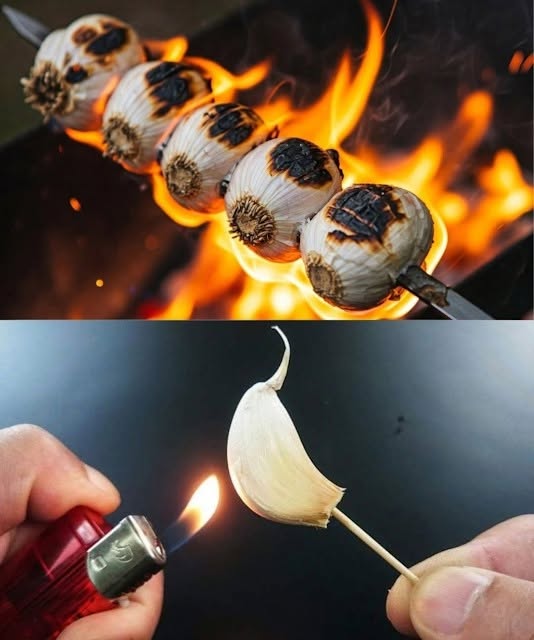
Burning Garlic at Home: What Happens After 15 Minutes
Burning garlic at home has recently become a popular household tip on social media, with claims that the smoke can remove unpleasant odors, purify the air, repel insects, eliminate harmful bacteria, or even provide health benefits. The dramatic image of garlic roasting over an open flame makes the idea look convincing, but there is an important difference between what happens to garlic when it burns and what people claim the smoke can do.
When garlic is exposed to high heat, its structure changes rapidly. Fresh garlic contains water, natural sugars, sulfur-containing compounds, and other plant substances. As the temperature rises, these compounds break down and the garlic begins to brown, char, and eventually burn.
After several minutes, the garlic may develop a strong roasted smell. If it continues to burn, blackened areas appear and smoke becomes increasingly noticeable. The smell can spread throughout a room, but a strong smell should not automatically be interpreted as evidence that the air has been purified.
In fact, deliberately burning garlic indoors can create smoke and irritating particles. Any material that is burned produces combustion byproducts, and breathing unnecessary smoke is not a healthy way to improve indoor air quality. This is particularly important for people with asthma, allergies, respiratory sensitivity, young children, or other conditions that make them more vulnerable to airborne irritants.
One of the most common claims is that burning garlic for 15 minutes will disinfect an entire room. There is no reliable evidence that placing burning garlic in a room provides a safe or effective method of disinfecting the air or surfaces. The smoke may contain compounds with interesting antimicrobial properties under laboratory conditions, but that does not mean burning garlic in a home will eliminate viruses, bacteria, mold, or other pathogens.
The same caution applies to claims that garlic smoke can cure respiratory infections, clear the lungs, treat headaches, lower blood pressure, or strengthen the immune system. These claims are not established medical treatments.
