
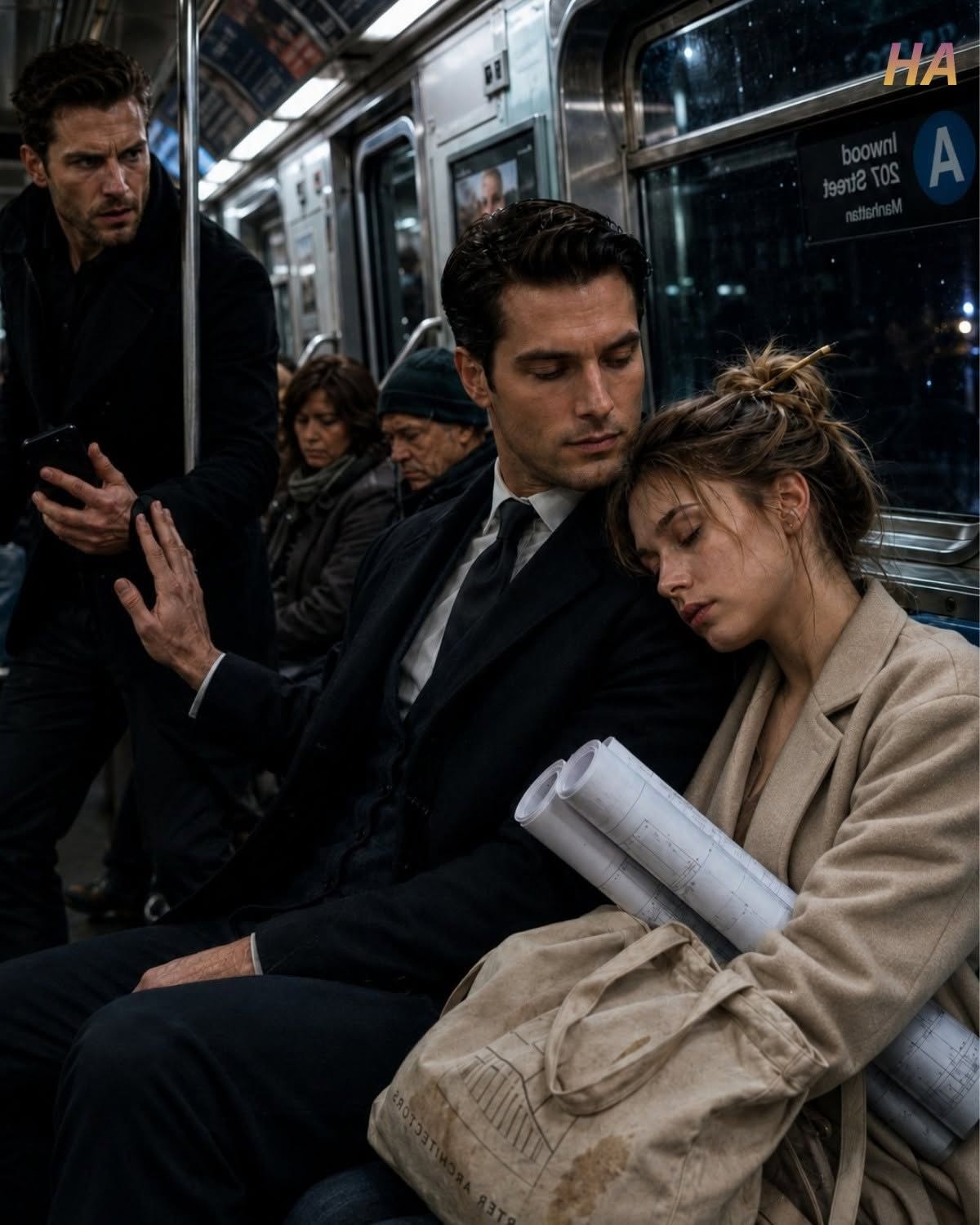
“Is that what you needed last night?”
Mia Carter’s fingers froze above her tablet.
For one breath, she forgot there were eight other people in the room. Forgot the screen behind her. Forgot the budget, the schedule, the contract, the twenty-seven unanswered emails waiting like wolves in her inbox.
All she could see was the late-night subway car.
The black coat.
The steady shoulder.
The terrible, humiliating memory of waking up just enough to realize she had been leaning on a stranger and then waking fully only when her stop had already passed.
Her face warmed.
So he remembered.
Of course he remembered.
Men like Daniel Kang probably remembered everything, especially things they could use later.
Mia lifted her chin.
“What I needed last night,” she said carefully, “was eight hours of sleep and a client who approves warm lighting without turning it into a philosophical investigation.”
Someone near the wall coughed into their fist.
Daniel’s mouth did not smile.
But something in his eyes changed.
Barely.
Enough for Mia to know she had amused him.
“Continue,” he said.
So she did.
Because that was what Mia Carter had learned to do when life embarrassed her.
Continue.
She explained the new lobby concept for the Harrington-Kang Hotel, a historic luxury property near Central Park South that had once hosted diplomats, movie stars, politicians, and people rich enough to pretend they did not care about being recognized. The building had bones: limestone columns, brass elevator doors, a marble staircase, and ceilings high enough to make ordinary people whisper.
But somewhere over the decades, it had lost its soul.
Too many renovations.
Too many committees.
Too many designers who thought luxury meant making everything gray, cold, and expensive enough to feel untouchable.
Mia wanted to bring it back to life.
Not make it casual.
Not cheapen it.
Humanize it.
She showed Daniel the sketches: low amber lighting over the reception area, restored walnut panels, a fireplace lounge where international travelers could sit without feeling displayed, textured walls inspired by old New York theaters, live plants in heavy ceramic vessels, and a hidden passageway for staff so service could feel effortless instead of frantic.
“This hotel should not announce wealth,” Mia said. “It should remember people.”
Daniel watched her, unreadable.
“And you believe walls can remember?”
