
For one perfect moment, there was no Andrés, no abandonment, no bills, no years of fear.
There was only the boy you had carried at forty-one becoming something even bigger than hope.
The ceremony was held in a grand auditorium with polished wood floors and banners hanging from the ceiling. Families arrived dressed beautifully, holding flowers, cameras, and pride. You wore the cream blouse Mateo loved because he said it made you look “like a president who reads poetry.”
You laughed when he said that.
But you wore it.
Mateo looked handsome in his dark suit. Taller than you now. Serious, nervous, trying not to show it. You adjusted his tie before entering the auditorium.
“You’re choking me,” he said.
“I’m fixing you.”
“I’m already fixed.”
“No child is fully fixed before a ceremony.”
He smiled.
That smile made every sacrifice worth it.
Then you saw Andrés.
He stood near the entrance, wearing a tailored suit and the same expensive cologne he had worn the day Mateo was born. His hair was grayer now, his face fuller, but his posture still carried that old arrogance.
Beside him stood Valeria.
No longer eighteen.
Now thirty-three, polished and tense, holding the hand of a little girl around six years old. Andrés’ daughter, you guessed. The child looked bored and sweet and innocent of all adult sins.
Your stomach tightened.
Mateo saw him too.
His face did not change.
That scared you.
Andrés approached with a smile too wide to be honest.
“Lucía,” he said, as if you were old friends meeting at a reunion.
You nodded once.
“Andrés.”
His eyes shifted to Mateo.
For one second, something like surprise crossed his face.
Maybe he had expected the baby he abandoned to remain small forever. Maybe seeing Mateo tall, composed, and brilliant made the years he missed stand up between them like witnesses.
“Son,” Andrés said, opening his arms slightly.
Mateo did not move.
“Hello, Andrés.”
Not Dad.
Not Father.
Andrés’ smile stiffened.
Valeria looked uncomfortable.
The little girl stared at Mateo with open curiosity.
“I wouldn’t miss this,” Andrés said.
Mateo tilted his head.
“But you did.”
The words were soft.
No anger.
That made them sharper.
Andrés cleared his throat.
“I know I wasn’t always around.”
Mateo looked at him.
“You were never around.”
People nearby began glancing over.
You touched Mateo’s arm gently.
Not to silence him.
Just to remind him he was not alone.
Andrés lowered his voice.
“Today isn’t the time for bitterness.”
Mateo’s eyes hardened.
“You’re right. Today is about work.”
Andrés smiled again, trying to recover.
“Exactly. And I’m proud of you.”
Mateo held his gaze.
“You don’t know me well enough to be proud of me.”
That was the first crack.
Andrés’ face flushed.
Valeria looked down.
The little girl squeezed her mother’s hand.
You almost felt sorry for her. Almost.
An usher called families into the auditorium, and the moment ended before it could explode. Andrés walked in behind you, clearly determined to behave like a father in public now that there were witnesses.
You took your seat near the front because Mateo had reserved it for you.
One seat.
Only one.
Andrés noticed.
He leaned down and whispered, “Where should I sit?”
Mateo looked at the rows behind you.
“Where guests sit.”
Andrés blinked.
“But I’m your father.”
Mateo’s expression remained calm.
“My mother is my parent.”
The second crack.
Andrés walked away stiffly.
You sat down with your heart pounding so hard you could barely hear the music beginning. Mateo went backstage with the other admitted students, leaving you alone in the front row with fifteen years sitting beside you like a ghost.
You remembered the hospital.
The late arrival.
The word “bonito.”
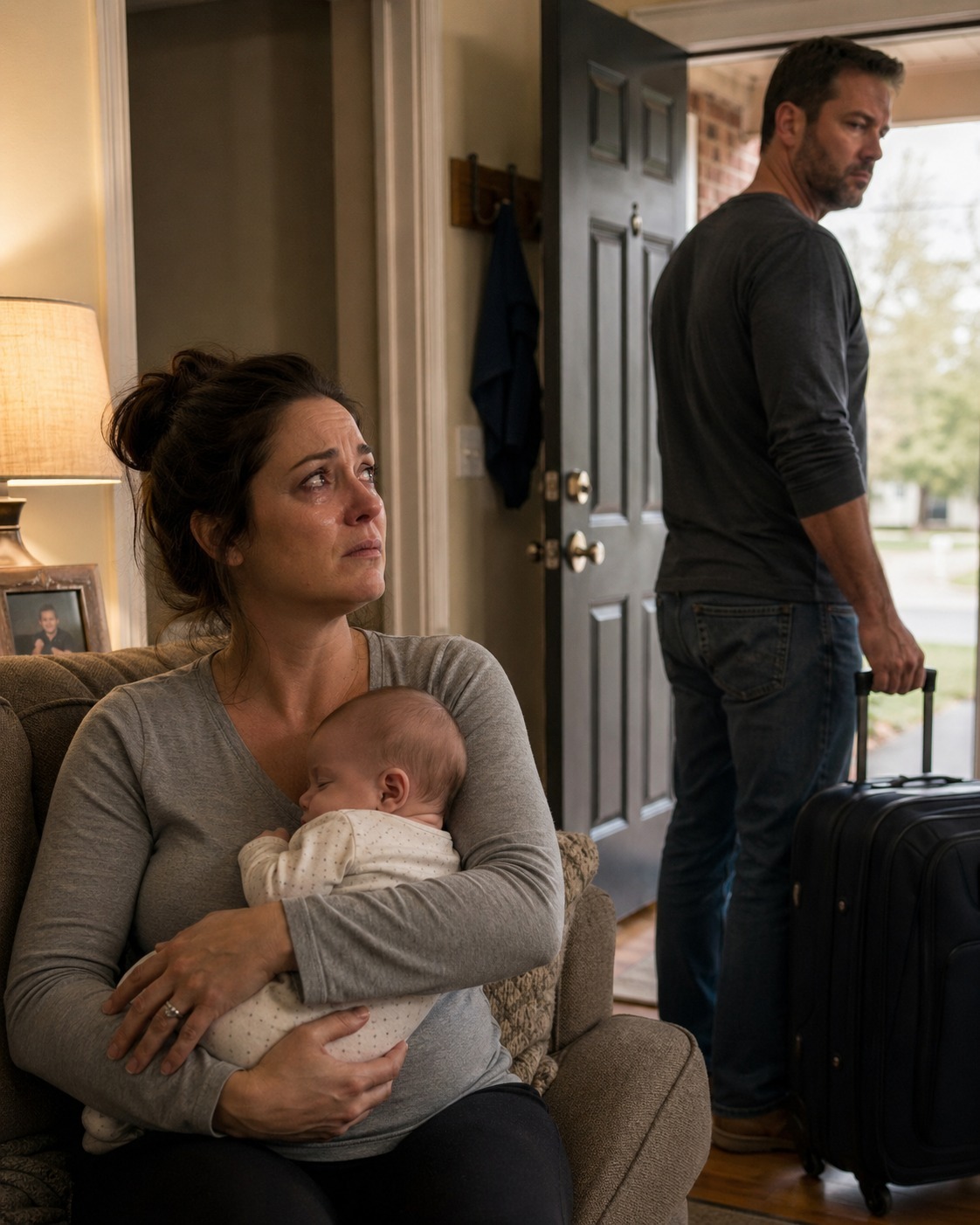
The maleta by the door.
“I’ll send money.”
You remembered the nights Mateo had fever and you had no one to call. The school forms where you wrote your name twice because father information was optional. The birthdays where Mateo pretended not to watch the door.
And now Andrés had come to clap.
How generous.
The ceremony began.
One by one, students walked across the stage as their names were announced. Each received a folder, a pin, and applause from families who had carried them there in visible and invisible ways.
Then the director stepped to the microphone.
“This year, one applicant stood out not only for academic excellence, but for a personal essay that moved the entire admissions committee.”
Your breath stopped.
Mateo had not told you this.
The director smiled.
“We have asked him to read a short excerpt today. Please welcome Mateo Herrera.”
Herrera.
Your last name.
Not Andrés’ surname.
A murmur moved through the room.
You heard it.
Andrés heard it too.
Mateo walked onto the stage.
Tall. Calm. Your son.
He unfolded a paper with steady hands, but you knew him. You saw the tiny movement in his jaw that meant he was nervous.
He looked out at the audience.
Then his eyes found you.
Not Andrés.
You.
And he began.
“When I was asked to write about the person who most shaped my life, people expected me to choose a famous author, a teacher, or maybe a historical figure. I chose my mother.”
Your hand flew to your mouth.
Mateo continued.
“She had me at forty-one, when people told her she was too old to begin. Then, when I was three months old, my father decided he was too young to stay.”
The auditorium went silent.
You felt Andrés shift somewhere behind you.
Mateo’s voice did not shake.
My mother never taught me to hate him. That was important. She told me the truth, but she never made my heart carry her anger. She worked when she was tired, smiled when she was scared, and gave me a home where absence was not allowed to become shame.”
You could no longer hold back tears.
He looked down at the paper, then back up.
“For years, I wondered if I was missing half of myself because one parent left. But eventually, I understood something. A person who leaves does not take half of you with them. They only reveal which half was never theirs to claim.”
Somewhere behind you, someone whispered.
Mateo paused.
Then came the three seconds that destroyed Andrés.
Your son looked directly toward the back rows, where Andrés sat pretending to belong, and said:
“My father gave me his absence. My mother gave me everything else.”
Three seconds.
One sentence.
That was all it took.
The room erupted.
Not in scandal.
In applause.
It started with one person, then ten, then the entire auditorium rising to its feet. Teachers clapped. Students clapped. Mothers cried openly. Fathers wiped their eyes.
You could not stand at first.
Your body felt too full of grief and pride and release.
Then Mateo looked at you again.
So you stood.
And when you did, the applause grew louder.
Not for wealth.
Not for perfection.
For endurance.
For the invisible years.
For every woman who had been left holding a child and a broken promise, then still built a life with her bare hands.
Mateo stepped away from the podium.
The director hugged him.
You looked back once.
Only once.
Andrés sat frozen in his chair, face pale, hands motionless on his knees. Valeria sat beside him, staring at him like she had finally heard the story without his editing. The little girl looked confused.
For once, Andrés had no performance ready.
The ceremony continued, but everyone knew the emotional center of the day had already happened.
Afterward, families gathered in the courtyard for photos. Students held flowers and certificates. Parents cried and fussed and adjusted collars.
Mateo found you near a stone fountain.
For a moment, neither of you spoke.
Then you said, “You didn’t warn me.”
He smiled gently.
“If I had, you would’ve told me to make it softer.”
“I would have.”
“I know.”
You touched his cheek.
“I’m proud of you.”
He leaned into your hand for half a second, the way he had when he was little.
“I know, Mom.”
Then Andrés appeared.
His pride had been wounded, and wounded pride often tries to disguise itself as authority.
“We need to talk,” he said.
Mateo turned.
“No, we don’t.”
Andrés lowered his voice.
“You humiliated me in front of everyone.”
Mateo looked genuinely thoughtful.
Then he said, “I told the truth in front of everyone. If that humiliated you, maybe the problem started before today.”
Valeria stepped forward.
“Andrés,” she said quietly, “stop.”
He turned on her.
“Not now.”
That was the tone.
You recognized it.
The tone he used when women became inconvenient.
Valeria recognized it too, maybe for the first time.
Her face changed.
Mateo noticed the little girl hiding behind Valeria’s skirt.
He lowered his voice.
“Don’t do this in front of her.”
Andrés looked at his daughter, then back at Mateo.
For a second, shame almost reached him.
Almost.
Then pride slammed the door.
“I tried to reconnect,” Andrés said. “Your mother poisoned you against me.”
Mateo’s face went still.
You saw the child in him then.
The seven-year-old with the blue folder.
The ten-year-old asking if his father knew he was smart.
The thirteen-year-old saying he wanted a father, not an audience.
“No,” Mateo said. “She protected me from waiting for you forever.”
Andrés had no answer.
Because there was none.
Valeria took the little girl’s hand.
“We’re leaving,” she said.
Andrés stared at her.
“What?”
She did not look at him.
“We are leaving.”
There was something final in her voice.
You watched her walk away with the child, and for the first time, you did not see the eighteen-year-old who had taken your husband.
You saw a woman who had grown old enough to recognize the man beside her.
Maybe she had once believed his version of the story. Maybe he had told her you were cold, bitter, impossible. Maybe he had painted himself as trapped, misunderstood, reborn through love.
Men like Andrés always need a villain in the life they abandoned.
That day, the villain disappeared.
Only the facts remained.
Andrés looked smaller after they left.
Not physically.
Spiritually.
He looked like a man standing in the ruins of every story he had told about himself.
Mateo turned to you.
“Can we go eat?”
You blinked.
“Now?”
“I’m starving.”
You laughed.
Not politely.
Fully.
The kind of laugh that rises from a place grief used to live.
“Yes,” you said. “We can go eat.”
You went to the same pizza place where you had taken him after his first science fair. It had new tables now, brighter lights, and higher prices, but the smell was the same.
Mateo ordered too much food.
You let him.
For once, you did not calculate the bill first.
As he ate, he looked younger again. Fifteen, not a boy exactly, not a man yet, still yours in the ways that mattered and already his own in the ways that mattered more.
“Do you regret it?” you asked.
“The speech?”
“Yes.”
He wiped his hands on a napkin.
“No.”
“Not even a little?”
He thought about it.
“I didn’t say it to hurt him. I said it because I spent years feeling like his leaving made me less. Today I wanted to say out loud that it didn’t.”
You nodded, tears threatening again.
He smiled.
“Please don’t cry into the pizza.”
“I’ll try.”
“You always say that before crying.”
“I gave birth at forty-one. I earned the right to cry dramatically.”
He laughed.
And that laugh became the real ceremony for you.
Not the stage.
Not the applause.
This.
