
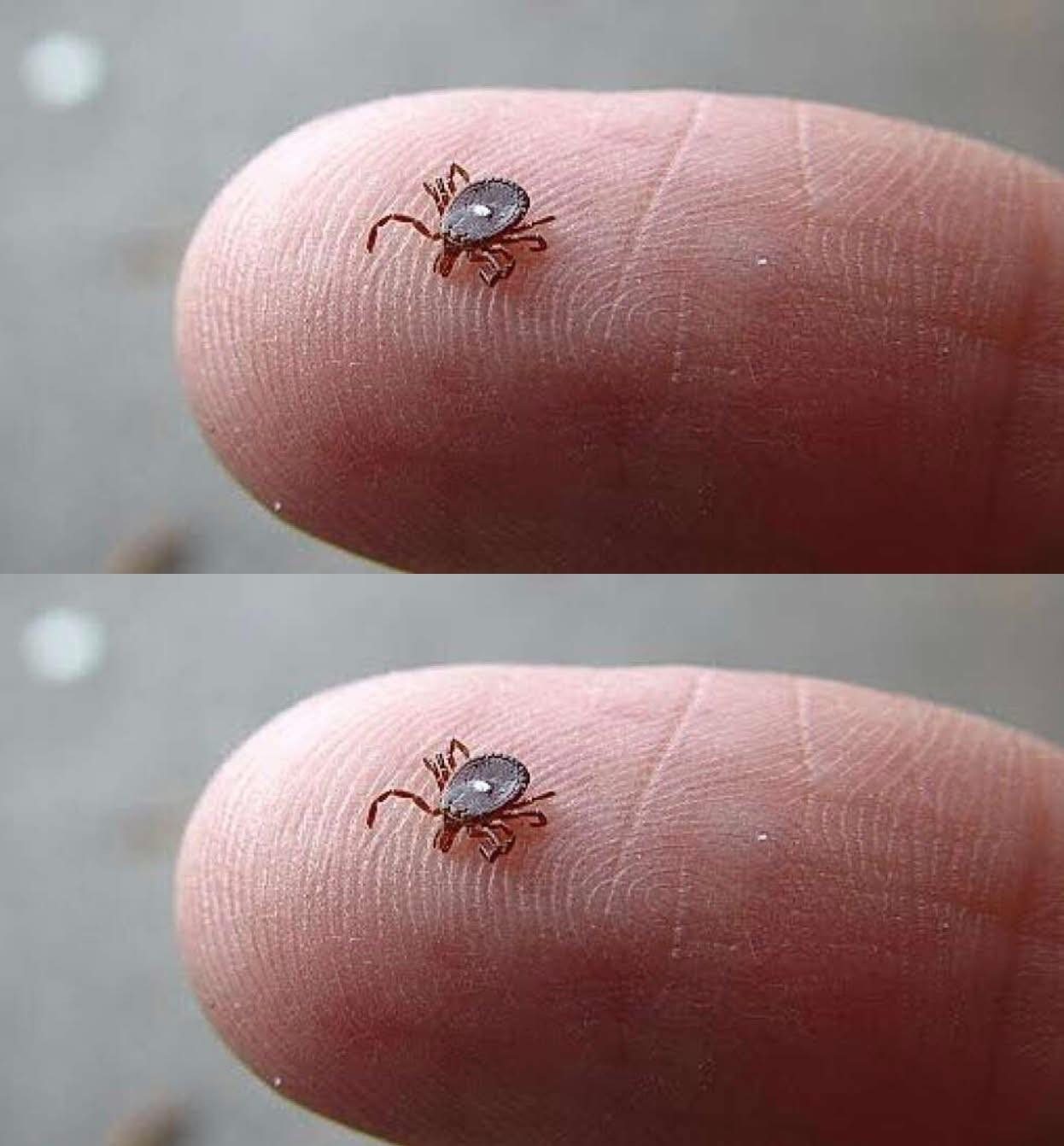
You’re gardening, hiking, or just relaxing in your backyard—when you feel it: a tiny, crawling itch. You look down… and see it.
A small, dark tick with a distinctive white dot on its back.
Your heart drops.
It’s a Lone Star Tick—and yes, it’s as concerning as it sounds.
But don’t panic.
While Lone Star Ticks can transmit serious illnesses, quick, proper action drastically reduces your risk. Here’s exactly what to do—step by step.
🩺 What Is a Lone Star Tick?
Scientific name: Amblyomma americanum
Appearance:
Females: Brown body with a single white spot (lone star) on the back
Males: White streaks or spots around the edges (no central dot)
Habitat: Common in the southeastern, eastern, and south-central U.S.—but spreading north due to climate change
Active: Spring through early fall (especially May–July)
⚠️ Why it’s dangerous: Unlike many ticks, the Lone Star Tick is aggressive, fast-moving, and doesn’t wait on grass—it actively hunts hosts!
🦠 Diseases It Can Transmit
Alpha-gal Syndrome (AGS) – The “red meat allergy”
Triggered by a sugar molecule (alpha-gal) the tick injects
Causes delayed allergic reactions (3–6 hours after eating beef, pork, lamb, or dairy)
Symptoms: Hives, swelling, nausea, even anaphylaxis
This is the most well-known risk of Lone Star Ticks
Southern Tick-Associated Rash Illness (STARI)
Similar to Lyme disease: fatigue, fever, headache, and a bull’s-eye rash
Not caused by the same bacteria as Lyme—but treated similarly
Ehrlichiosis & Tularemia (less common)
Flu-like symptoms: high fever, chills, muscle aches, confusion
❗ Important: You cannot get Lyme disease from a Lone Star Tick—but you can get other serious conditions.
✅ What to Do Immediately After Finding One:
✅ What to Do Immediately After Finding One
Step 1: Remove It Properly
Use fine-tipped tweezers
Grasp the tick as close to the skin as possible
Pull straight upward with steady pressure—do not twist or jerk
Do NOT use matches, petroleum jelly, or nail polish—they increase disease risk
Step 2: Clean & Save
Wash the bite area with soap and water
Apply antiseptic
Save the tick in a sealed bag or container with a damp cotton ball—label with date and location
Step 3: Monitor for Symptoms
Watch for 30 days for:
