
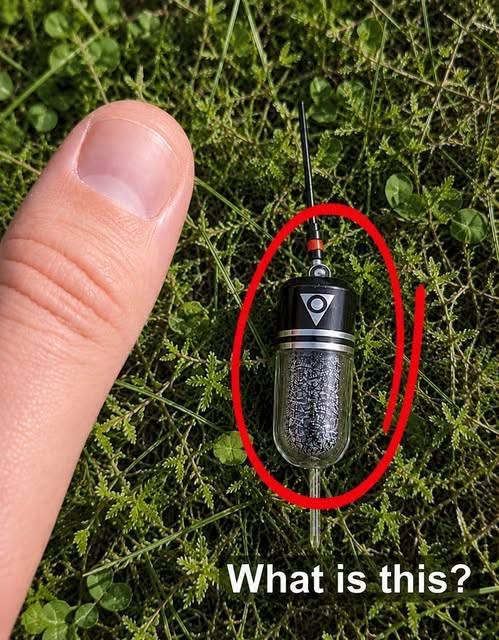
Radio telemetry has been used by wildlife researchers for decades to study the movements of animals. In a typical system, a small transmitter sends a radio signal that researchers can detect using suitable receiving equipment and an antenna. Smithsonian’s National Zoo and Conservation Biology Institute explains that scientists have used radio telemetry since the 1960s to locate animals and follow their movements. The transmitter is carried by the animal, while researchers use a receiver and antenna to detect its signal. As researchers move closer to some types of transmitters, the received signal can help them determine the animal’s approximate location. This technology allows scientists to study animals that would otherwise be difficult to observe continuously.
Miniaturization has made tracking technology useful for increasingly small species. Scientific literature describes transmitters weighing well under a gram, although reducing size creates limitations involving battery life, transmission range, power, and other technical factors. A 2025 scientific review examined miniature transmitters designed for tracking free-ranging wildlife and discussed their use for small birds, bats, rodents, and insects. Researchers continue working to make devices smaller while still producing usable signals. The goal is generally to collect useful movement data while limiting the burden that equipment places on the animal. The specific type of transmitter chosen depends heavily on the species and research question.
The technology can sometimes be surprisingly tiny. One peer-reviewed study described experimental radio-frequency transmitters weighing approximately 152 to 160 milligrams and measuring only a few millimeters across and a little more than a centimeter in length. Those dimensions help explain why genuine scientific equipment can occasionally look unfamiliar or almost insignificant when removed from its normal context. A miniature transmitter lying among grass can easily look very different from the larger electronic devices people encounter every day. Small size by itself is therefore not evidence of a secret or suspicious purpose. In wildlife research, compact dimensions can be necessary because the animal carrying the equipment may itself be extremely small.
The Motus Wildlife Tracking System provides another real-world example of this technology. Motus is an international collaborative research network that uses automated radio telemetry to study the movements and behavior of small animals. According to the organization, its research includes birds, bats, and insects. Animals fitted with compatible tags can be detected when they move within range of participating receiving stations. Those detections can help researchers examine migration routes, stopover locations, habitat use, survival, and other aspects of animal movement. The network illustrates how a transmitter that looks insignificant to a passerby can form one small part of a much larger scientific system.
Researchers have even explored radio telemetry for animals as small as bumble bees. In August 2026, the U.S. Fish and Wildlife Service described research in which tiny transmitters were fitted to bumble bees to investigate how they moved through habitat while searching for food, nesting areas, and cover. The agency explained that radio telemetry is more commonly associated with birds and mammals but can also provide information about much smaller animals when the technology is sufficiently lightweight. Such research demonstrates how quickly tracking equipment has continued to develop. A tiny tag does not necessarily need GPS, a camera, or continuous internet connectivity to be useful. A radio signal alone can provide valuable information when researchers have the appropriate receiving infrastructure.
When people hear the word “tracking,” it can sometimes produce an unnecessarily dramatic mental image. Scientific wildlife tracking is generally concerned with questions about animal movement, habitat, behavior, migration, survival, and conservation. A radio transmitter designed for an animal is not automatically a camera, microphone, or device for monitoring nearby people. Different technologies perform different functions, and their capabilities should not be confused. A simple radio tag may do little more than emit an identifying signal that specialized equipment can detect. Describing it accurately is more informative than imagining capabilities for which there is no evidence.
The original account says that no visible camera was identified on the object. That observation matters because an antenna-like component alone does not establish that something can record images or sound. Radio transmitters require antennas because they communicate through radio signals. The presence of a wire or antenna can therefore be completely consistent with ordinary telemetry equipment. Without technical identification, it would be irresponsible to claim that an unknown object was conducting surveillance of people. The most cautious conclusion is simply that its appearance was described as consistent with a small transmitter, while its exact identity and history were not independently established.
The dog’s reaction is another part of the story that should not be exaggerated. According to the published account, the dog detected or became interested in the area before the walker noticed the object. Dogs have highly developed senses, particularly smell, but the available account does not establish precisely what attracted this particular animal’s attention. It could have been an odor, movement, something associated with the object, or another feature of the immediate surroundings. There is no evidence in the article showing that the dog somehow recognized the device as electronic or understood its purpose. The most accurate description is simply that the dog’s behavior reportedly drew the person’s attention toward the location.
