
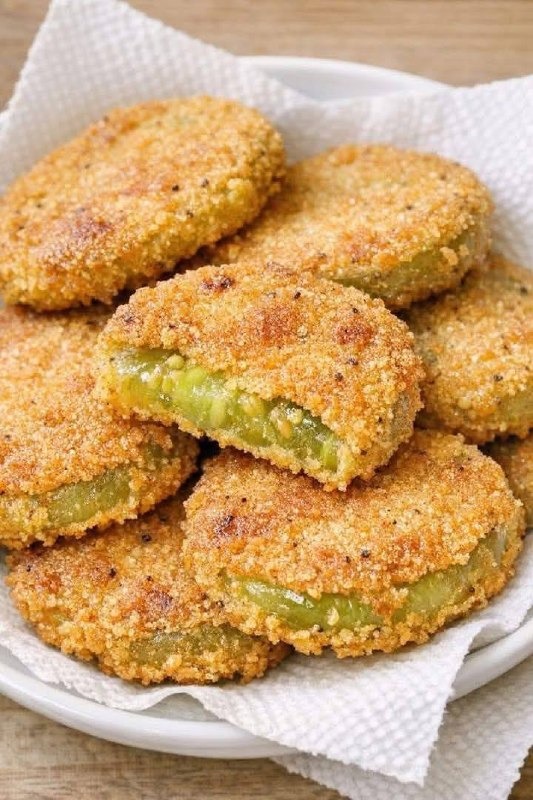
Cool Completely: Before storing, allow the fried green tomatoes to cool completely to room temperature. Storing them while still warm will create condensation, leading to sogginess.
Airtight Container: Once cooled, transfer them to an airtight container. Place a layer of paper towels at the bottom of the container to absorb any residual moisture, and if stacking, place paper towels between layers as well.
Refrigeration: Store in the refrigerator for up to 2-3 days. While they will lose some of their crispiness, the flavor will still be enjoyable.
Freezing (Not Recommended for Crispness): Freezing fried green tomatoes is generally not recommended if you prioritize the crispy texture. The freezing and thawing process can make the breading mushy. However, if you must, arrange them in a single layer on a baking sheet and freeze until solid, then transfer to a freezer-safe bag or container. They can be frozen for up to 1 month.
Reheating:
The key to reheating fried green tomatoes is to avoid the microwave, as it will inevitably turn them into a soggy mess. The goal is to get them crispy again.
Oven or Toaster Oven (Recommended): This is the best method for restoring crispiness.
Preheat your oven or toaster oven to 375°F (190°C).
Arrange the fried green tomatoes in a single layer on a baking sheet.
Bake for 8-12 minutes, or until heated through and the breading is crisp again. Keep a close eye on them to prevent burning.
Air Fryer (Excellent Option): An air fryer works wonderfully for reheating, providing a similar crispness to fresh.
Preheat your air fryer to 350°F (175°C).
Place the fried green tomatoes in a single layer in the air fryer basket.
Air fry for 5-8 minutes, shaking the basket halfway through, until hot and crispy.
Skillet (Good Option): If you prefer stovetop reheating, a dry skillet can work.
Heat a non-stick skillet over medium heat (no oil needed).
Add the fried green tomatoes in a single layer and heat for 2-3 minutes per side, until warmed through and re-crisped.
No matter the reheating method, remember that reheated fried green tomatoes will likely never be quite as perfect as when they were first made, but these methods will get them as close as possible to their original crispy glory.
Frequently Asked Questions
What kind of tomatoes are best for fried green tomatoes?
The best tomatoes for fried green tomatoes are firm, unripe green tomatoes. These are not a specific variety of tomato; rather, they are any variety of tomato that has not yet ripened and turned red. Their firm texture holds up well to frying, and their tart, tangy flavor provides a wonderful contrast to the savory, crispy breading. Avoid soft or partially ripened tomatoes, as they will become mushy when cooked.
Can I use an egg wash to help the breading stick?
While this particular recipe is designed to be super simple with just 4 ingredients, you absolutely can use an egg wash for a more robust and adherent breading. If you choose to, after slicing and blotting your tomatoes, first dredge them lightly in all-purpose flour, then dip them in an egg wash (typically 1 egg whisked with a tablespoon or two of milk or water), and finally coat them in the seasoned breadcrumbs. This three-step breading process creates a thicker crust and helps ensure excellent adhesion, though it does add two more ingredients to your list.
How do I know when the oil is hot enough without a thermometer?
If you don’t have a deep-fry thermometer, a common and effective way to test the oil temperature is to drop a tiny pinch of the breadcrumb mixture into the hot oil. If the breadcrumbs immediately start to sizzle, bubble vigorously, and turn golden brown within a few seconds, your oil is ready. If they just sit there and slowly bubble, the oil isn’t hot enough. If they burn instantly, the oil is too hot and needs to cool down slightly before you begin frying.
What causes fried green tomatoes to be soggy?
Several factors can lead to soggy fried green tomatoes. The most common culprits include not blotting enough moisture from the tomato slices before breading, which creates steam during frying. Overcrowding the pan can also lower the oil temperature too much, causing the breading to absorb excess oil instead of crisping up. Lastly, not draining the fried tomatoes properly on a wire rack after cooking can trap oil and steam, making them soggy. Always ensure your oil is at the correct temperature, fry in batches, and drain thoroughly.
