
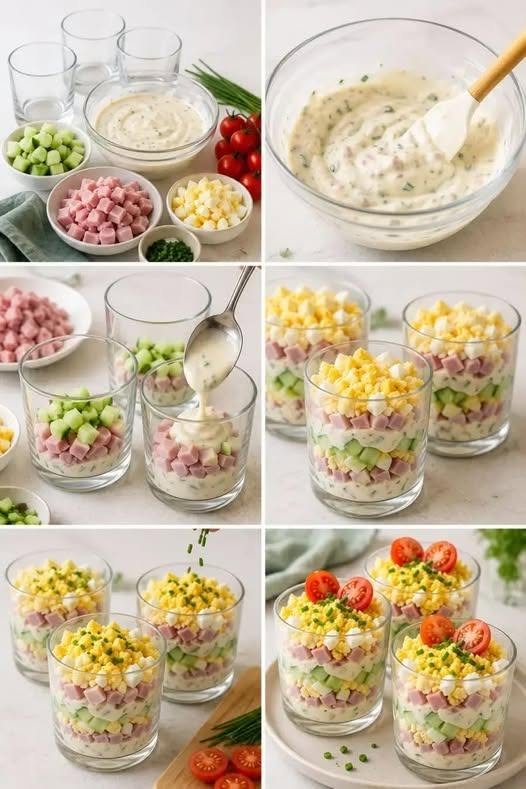
What you’ll achieve with this recipe: The goal isn’t just to fill verrines (small glass jars). The real appeal of this recipe lies in achieving a consistent, visually appealing, and satisfying presentation. Each bite should offer a precise contrast: the freshness of the cucumber, the sweet and savory flavor of the ham, the melt-in-your-mouth texture of the hard-boiled eggs, and a light, flavorful, yet not overpowering sauce.
This recipe works because it plays on complementary textures. The cucumber provides juiciness and freshness, the ham adds depth and a well-rounded flavor, the hard-boiled eggs structure the verrine with their soft texture, and the sauce binds the elements together without overpowering the flavors. When the balance is well thought out, you get a fresh, satisfying, and visually appealing verrine.
This is also a very practical recipe for entertaining. You can prepare the components in advance, then assemble at the last minute or a few hours beforehand. For a buffet, individual verrines are often more elegant than a large salad bowl, as they hold their shape and allow for easy serving.
What ingredients make for well-balanced verrines?
For 4 generous servings, you will need:
1 medium cucumber
4 eggs
150g diced cooked ham
120g Greek yogurt or plain cream cheese
2 to 3 tablespoons of mayonnaise, depending on the desired consistency
1 teaspoon of mild mustard, optional
1 to 2 tablespoons of chopped chives
Fine salt
Ground black pepper
1 small piece of very finely grated garlic or 1 chopped spring onion, optional
A few cherry tomatoes for garnish, optional but very pretty when serving
These quantities will make generously filled verrines, with each element present without too much sauce. If you are serving this recipe as an appetizer, you can use slightly smaller verrines. For a starter, use medium-sized servings to ensure a satisfying portion.
Cucumber: Freshness and Crunchy
Cucumber is the ingredient that brings the most freshness. Cut into small, even dice, it adds a delightful crunch to every spoonful and lightens the verrine. It’s also what makes the whole thing more vibrant on the palate.
Choose a firm cucumber with smooth, shiny skin. If it’s very large and full of seeds, it may release more water. For a successful verrine, a young, dense cucumber is often more appealing. Cutting it into small cubes is important: it ensures a pleasing visual consistency and allows for a touch of crunch in each layer.
The most important point is its preparation. The cucumber must be thoroughly dried after cutting to avoid a watery verrine. It’s a small detail, but it makes all the difference to the final result.
Cooked ham: the indulgent and savory touch
The ham brings a salty, mild, and comforting note. Cut into even dice, it provides texture and a pleasant contrast with the cucumber. It also bridges the gap between the fresher layers and the creamy base.
Choose a good quality ham that isn’t too moist to prevent it from making the verrine soggy. A tender cooked ham works very well, but you can also opt for a more flavorful, premium ham if you want a stronger taste. The important thing is to keep the cubes small enough to blend easily with the other layers.
