
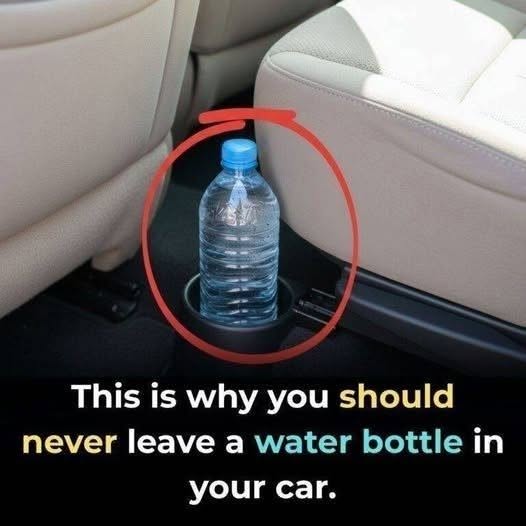
The Science of Light Refraction
To understand this risk, we have to look at basic optics. A cylindrical clear plastic bottle filled with water functions exactly like a magnifying glass. In scientific terms, it acts as a convex lens.
When direct sunlight hits the bottle, the light rays do not just pass straight through. Instead, the water bends (refracts) the light, concentrating a wide beam of sunlight into a tiny, intensely bright focal point. If this focal point lands on a dark, flammable surface inside your vehicle—such as a fabric car seat, a floor mat, or clothing left on the seat—it can generate an extreme amount of localized heat.
The Incubation Period
A parked car on a sunny day is essentially a greenhouse. The windows allow sunlight to enter but trap the resulting thermal energy inside. On an 80-degree Fahrenheit (27 degrees Celsius) day, the temperature inside a vehicle can reach over 100 degrees Fahrenheit (38 degrees Celsius) in just 20 minutes.
When the interior is already baking, the highly concentrated beam of light from the water bottle only needs a few minutes to start a reaction. It begins with a small burn mark or a trail of smoke. If the angle of the sun remains consistent and the flammable material catches the heat perfectly, it can result in a smoldering hole in your upholstery or, in rare cases, a small flame.
