
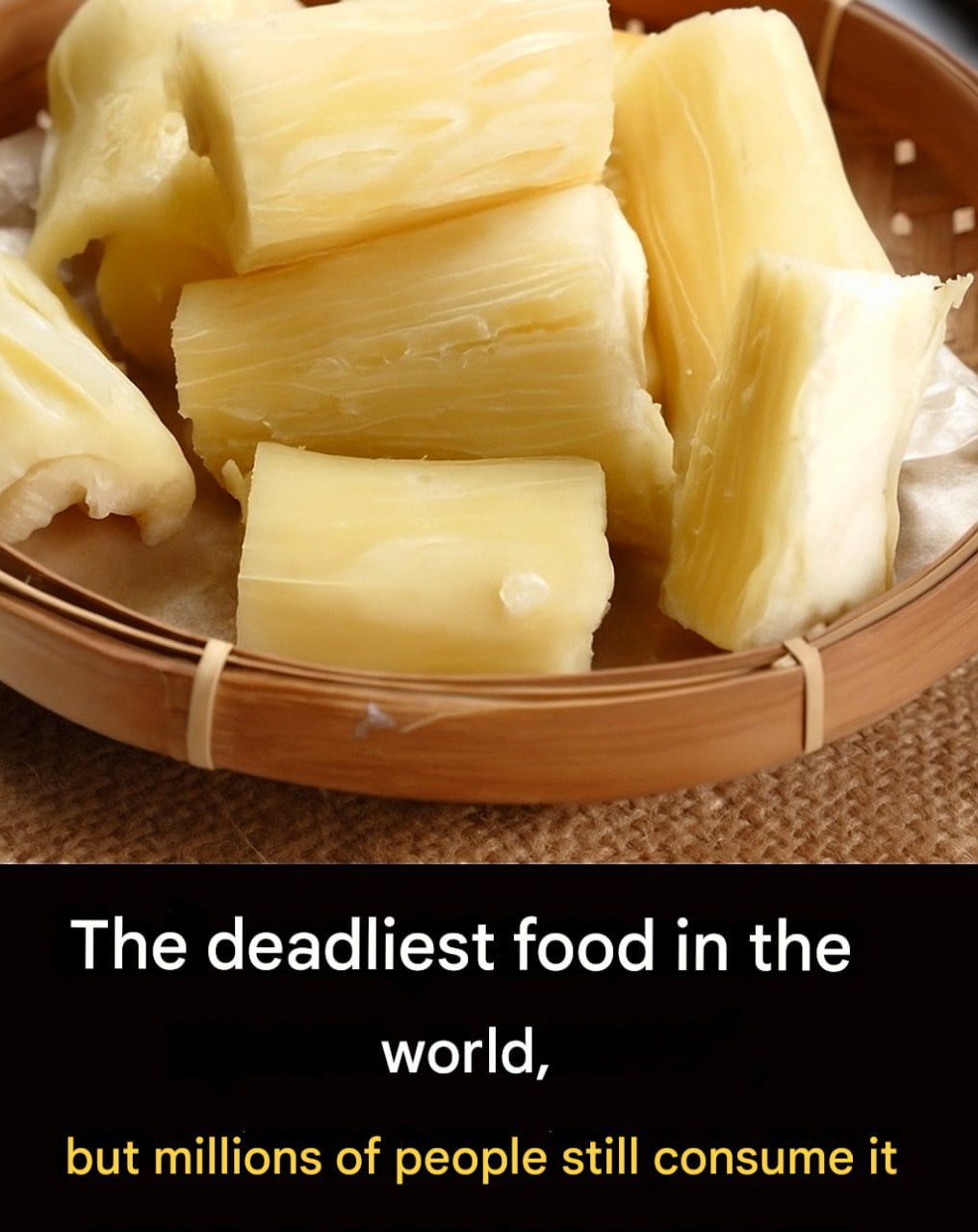
The “Deadliest Food in the World” — Yet Millions Still Eat It 🌍⚠️
Around the world, some foods can become dangerous if they are prepared incorrectly. One food often called “the deadliest in the world” is:
Cassava
Cassava is a starchy root vegetable eaten daily by hundreds of millions of people, especially in:
- Africa
- South America
- Asia
It is a major source of calories for many communities because it is:
- Affordable
- Filling
- Easy to grow in difficult climates
But raw cassava naturally contains compounds that can release toxic cyanide if not processed properly.


Why Can Cassava Be Dangerous?
Cassava contains substances called:
Cyanogenic glycosides
When the plant is damaged, chewed, or improperly prepared, these compounds can produce:
Cyanide
Cyanide is a toxic chemical that interferes with the body’s ability to use oxygen.
Eating improperly processed cassava may cause symptoms such as:
- Nausea
- Vomiting
- Dizziness
- Stomach pain
- Weakness
In severe cases, poisoning can become life-threatening.
Yet Millions Eat It Safely Every Day
Despite the risks, cassava is safely consumed worldwide because traditional preparation methods greatly reduce the toxic compounds.
Common preparation techniques include:
- Peeling
- Soaking
- Fermenting
- Drying
- Boiling thoroughly


These methods help remove most of the naturally occurring toxins.
Communities that have prepared cassava traditionally for generations usually understand how to make it safe.
Sweet Cassava vs Bitter Cassava
There are different varieties of cassava.
Sweet cassava
contains lower levels of cyanogenic compounds and is generally safer after normal cooking.
Bitter cassava
contains much higher toxin levels and requires more extensive processing before consumption.
Improperly processed bitter cassava has been linked to outbreaks of poisoning in some regions.
Why Cassava Is So Important Globally
Cassava is considered one of the world’s most important staple crops because it:
- Grows in poor soil
- Tolerates drought
- Provides large amounts of carbohydrates
For millions of families, cassava is a vital food security crop.
It is commonly eaten as:
- Flour
- Bread
- Porridge
- Chips
- Tapioca


Tapioca, widely used in desserts and bubble tea, also comes from cassava starch.
