
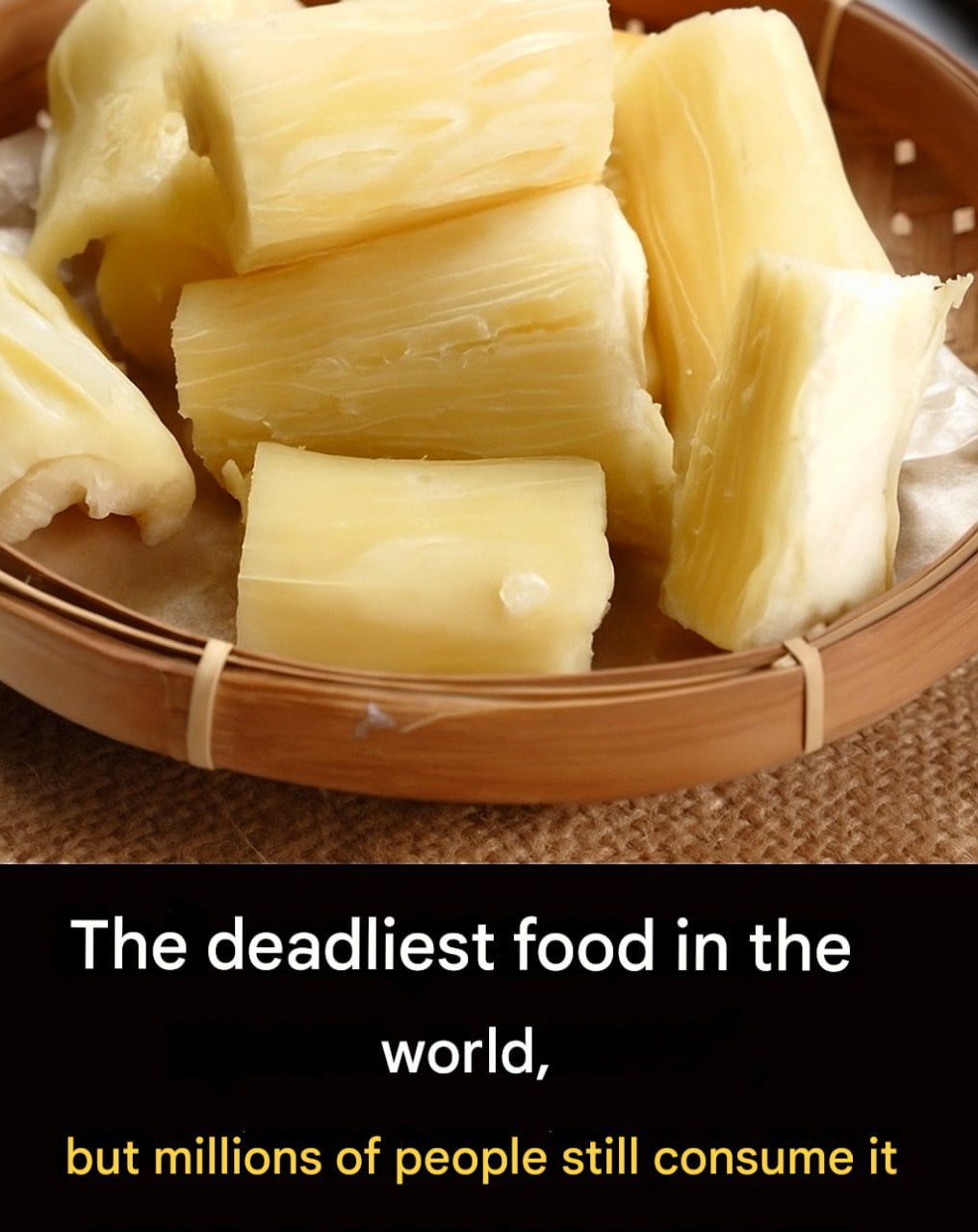
Cassava is not the only food that may become dangerous under certain conditions.
Examples include:
Fugu
Contains potent toxins if improperly prepared.
Red Kidney Beans
Can contain toxic lectins when undercooked.
Ackee
May cause poisoning if eaten before fully ripe.


This shows how proper food preparation is essential for safety.
The Role of Food Science
Modern food science helps improve cassava safety through:
- Better processing methods
- Education programs
- Lower-toxin crop varieties
Researchers continue working to reduce health risks in regions heavily dependent on cassava.
In some areas, poor nutrition combined with chronic exposure to improperly processed cassava has been associated with neurological conditions such as:
Konzo
However, these cases are usually linked to severe food insecurity and inadequate processing methods.
Is Cassava Healthy?
When prepared properly, cassava can provide:
- Carbohydrates
- Energy
- Some fiber
- Vitamin C
However, compared with other foods, cassava is relatively low in:
- Protein
- Certain vitamins
- Minerals
This is why balanced nutrition remains important.
Final Thoughts
Cassava is often dramatically called “the deadliest food in the world” because of the toxic compounds it naturally contains. But the reality is more nuanced.
Millions of people safely consume cassava every day thanks to traditional preparation methods that remove harmful toxins.
Like many foods in nature, safety depends heavily on:
- Knowledge
- Preparation
- Moderation
- Proper cooking techniques
